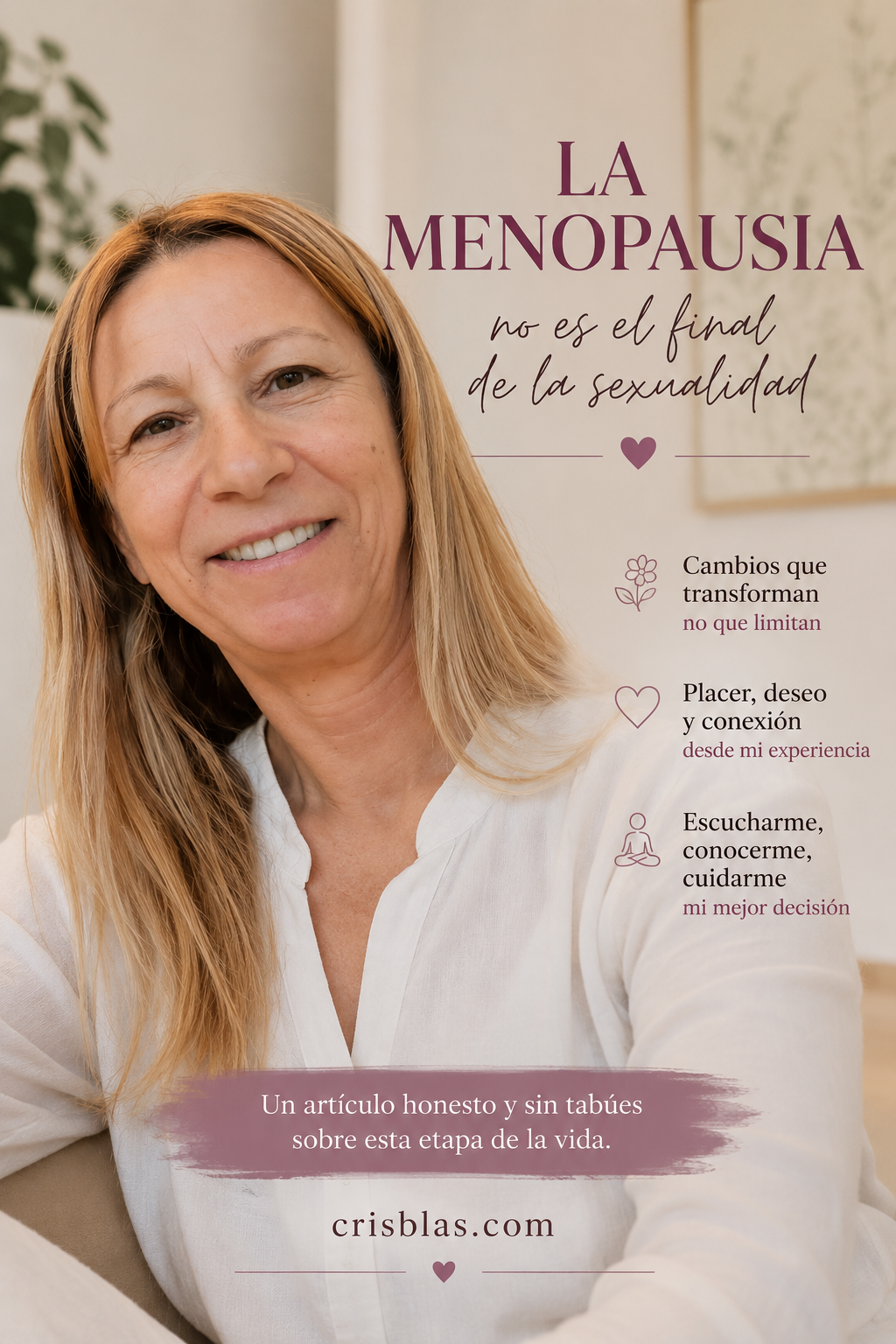
I’ve heard the word menopause mentioned so many times, and I still keep hearing it. I suppose there comes a moment when the subject starts surrounding you and no longer feels distant. The good thing now is that I can also speak from my own experience.
It’s true that in my case menopause was induced and didn’t arrive naturally, but the change is still there. Sooner or later, the body changes when it stops producing eggs.
The truth is, it never scared me. It was never something that obsessed me and, in fact, there were moments when I was actually looking forward to reaching this stage because I was tired of my period. After so many years of discomfort and inconvenience during sexual relationships, I was ready for it to be gone!
Now more than ever, I realise that menopause is still surrounded by stereotypes, taboos and misunderstandings.
It seems that the moment a woman stops menstruating, society automatically places her in some kind of invisible waiting room. As if desire, pleasure or sensuality had an expiration date.
And honestly, from my personal experience, that’s not how I’m living it.
Yes, there are changes. Of course there are. Just as there were when menstruation began, when we discovered our sexuality, or as our bodies changed over the years. The body never stands still. Expecting it to function at 50 the same way it did at 20 is as absurd as wanting to keep a teenage body forever.
For example, I notice positive changes. I enjoy vaginal orgasm more. I no longer have certain physical discomforts I used to experience.
A 62-year-old friend recently told me that many of the anxieties she had around food disappeared, something we also experience while menstruating.
Other women discover a much calmer sexuality, less obsessed with pleasing others and more focused on feeling.
So what? Sometimes there’s less lubrication? Well, that’s why there are lubricants. And sex toys. I honestly don’t understand the drama. We wear glasses, use cream, exercise, take vitamins… Yet any support related to female sexuality is sometimes seen as a personal defeat.
And then there’s another issue: be careful not to hand over your body and mind completely to whatever any doctor tells you.
I’m not saying there aren’t wonderful professionals. There are. And many times they help enormously. But I also see women terrified because someone told them that “they would never be the same again”, that “this is just how it is now,” and they’re loaded up with pills, medication and supplements that are often more about marketing than real health.
Listen to your body, Get to know it and Observe yourself.
Observe what feels good and what doesn’t, use the tools we have today to know yourself better, adapt and accept yourself, and stop caring about what others think. Don’t use menopause as an excuse or a shield. Be yourself and trust in yourself, not only in what others tell you.
I don’t want to live this stage as a decline. I want to live it as another transformation.
And I believe that often we suffer more because of the fear of how others will see us, because we have judged ourselves first.
Sexuality does not disappear at 50. Nor at 60. What often disappears is the constant obligation to perform, prove, compete or fulfil certain roles.
And perhaps that is where another, much freer form of pleasure begins.
Menopause does not mark the end of desire. Discover how to live this stage as an opportunity to reconnect with your body, rediscover pleasure and transform your sexuality consciously with Cris Blas.