Yesterday, June 7th, I attended the Lago swimming pool for International Naturist Day, an event that, in theory, aims to promote respect for natural nudity and give visibility to the naturist movement.
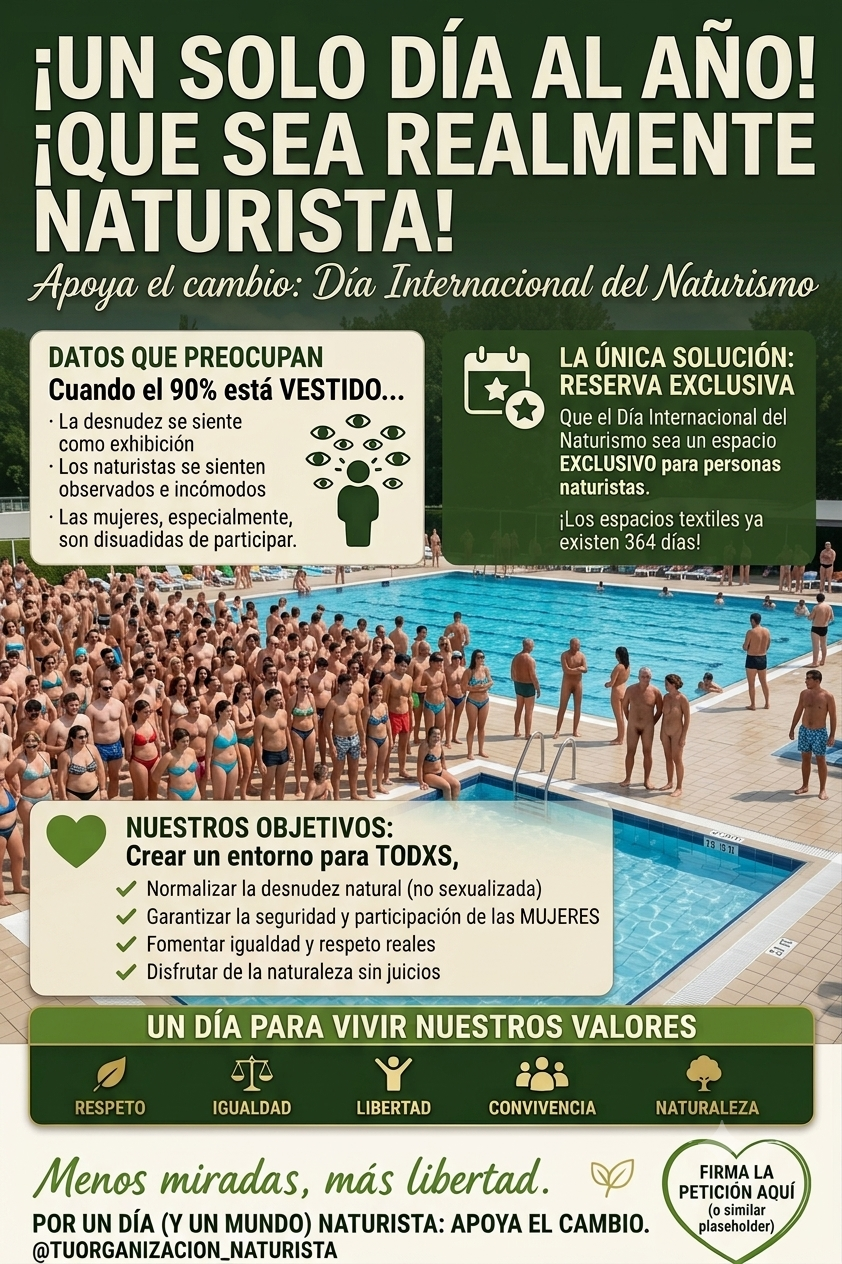
However, the reality was very different from what I expected. The vast majority of people present were dressed. Naturists were a very small minority and, within that minority, women represented an even smaller proportion.
This situation leads me to an important reflection: what is the point of celebrating International Naturist Day if naturist practice is reduced to a small minority surrounded by clothed people?
For most of the year, recreational spaces enforce dress codes. Naturists accept this reality, even if we do not always share the philosophy behind it. However, when a day specifically dedicated to celebrating and promoting naturism arrives, it seems logical that the focus should be on that practice itself.
When a space is predominantly naturist, nudity becomes normalised. No one stands out. No one feels watched. The experience becomes comfortable, respectful, and equal for everyone. But when 90% or more of attendees remain clothed and only a minority are nude, the situation changes dramatically. Nudity is no longer perceived as something natural and instead becomes a visible exception.
This particularly affects women. Many already face social and cultural barriers when considering naturism. If they also feel that they will be part of a small nude minority among a large clothed majority, it is understandable that they may choose not to participate. The result is exactly the opposite of what a naturism promotion event should achieve.
For this reason, I believe that organisers of this type of event should reflect on the format. If there is a day specifically dedicated to naturism, it would be reasonable for the space to be reserved exclusively for those who wish to participate under naturist conditions. This is not about excluding anyone, but about ensuring that the event fulfils its purpose: normalising nudity, promoting equality among participants, and providing a comfortable experience for those who practise naturism.
Textile spaces already exist throughout the rest of the year. That is precisely why International Naturist Day should be an exception that allows people to fully experience naturist values such as respect, equality, body freedom, and coexistence.
If we want to promote naturism, we must create environments where people feel included, not observed.